
Nintendo's recent Switch 2 announcement revealed the console will exclusively support storage expansion through MicroSD Express cards - a potentially frustrating but technically justified decision that prioritizes blazing-fast loading speeds.
The Need for Speed: MicroSD Express Explained
For years, standard MicroSD card speeds crawled through various iterations from initial 12.5MB/s to UHS-III's 312MB/s. The game-changing SD Express standard introduced five years ago utilizes PCIe 3.1 interfaces (like high-end NVMe SSDs) to achieve staggering speeds up to 3,940MB/s for full-sized cards. While MicroSD Express variants max out at 985MB/s, that's still triple the speed of conventional MicroSD cards.
Nintendo's Storage Revolution
This requirement makes perfect sense alongside Switch 2's upgraded UFS internal storage. Early tests show dramatic load time improvements - 35% faster fast-travel and 3x initial load speed boosts according to tech analysts. By mandating MicroSD Express compatibility, Nintendo ensures external storage won't bottleneck next-gen games demanding rapid data access.
The speed gap between storage options is massive
Future-Proofing Gamers' Investments
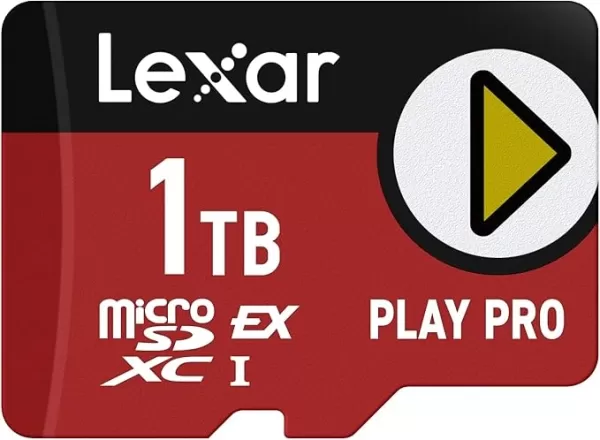
While current MicroSD Express options are limited (Lexar's 1TB model costs $199 and SanDisk tops out at 256GB), this forward-thinking standard leaves room for growth. As manufacturers expand production, we'll likely see higher capacities and improved speeds that take full advantage of Switch 2's capabilities.
Poll: Are You Upgrading?
The storage speed revolution coming with Switch 2 represents a fundamental shift in portable gaming technology. While the MicroSD Express requirement might require some gamers to upgrade their existing memory cards, the resulting performance benefits could redefine our expectations for handheld gaming.