Summary
- A high school student successfully ported the iconic 1993 game Doom into a PDF file, resulting in a playable, albeit slow, gaming experience.
- Doom's small file size has enabled its execution on countless unusual platforms, from the Nintendo Alarmo to within other video games.
- Enthusiasts continue to demonstrate its timeless appeal by finding creative new ways to run Doom, showcasing its enduring legacy and relevance.
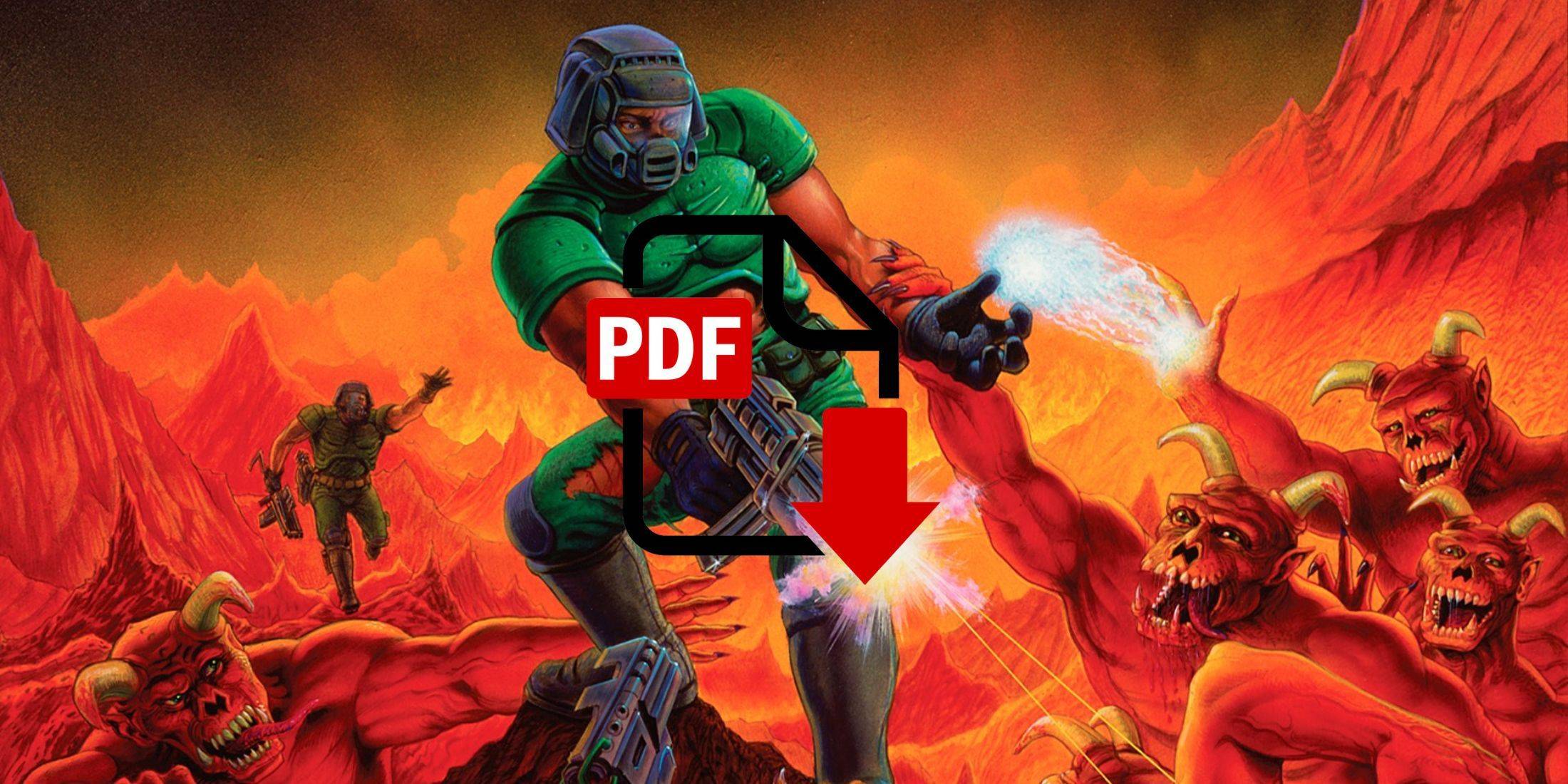
A dedicated high school student has achieved the remarkable feat of porting the profoundly influential game Doom (1993) into a PDF document. This surprising accomplishment adds to the long list of unexpected devices that have run this classic title over the years.
Developed by id Software, Doom is widely regarded as one of the most significant video games in history, particularly for pioneering the first-person shooter (FPS) genre. Its impact was so immense that it inspired the term "FPS" itself, with many subsequent games in the genre being referred to as "Doom clones." In recent years, a popular trend has emerged among programmers and gaming fans: attempting to run Doom on the most improbable hardware. From refrigerators and alarm clocks to car stereos and beyond, if a device has even a hint of computing power, someone has likely tried to run Doom on it. This playful yet technically impressive trend has now reached a new milestone.
3
High school student and GitHub user ading2210 has ported the classic Doom into a PDF file. As the creator explains, the PDF format supports JavaScript, which allows for capabilities like 3D rendering, making HTTP requests, and detecting monitor specifications. While most interactive PDFs use small text boxes as individual pixels, Doom's 320x200 resolution would require tens of thousands per frame—an impractical approach. Instead, ading2210's version uses one text box for each row of the screen. This method makes the game functional but slow, as demonstrated in a shared video. The port lacks color, sound, and text, and it operates with an 80-millisecond response time per frame.
High School Student Ports Doom (1993) to a PDF
This achievement is partly possible due to Doom's remarkably compact size of just 2.39 megabytes. Not long ago, in November, a programmer successfully made Doom playable on the Nintendo Alarmo, utilizing the top dials for character movement and side buttons for menu navigation. The creativity doesn't stop at physical devices; another innovative player managed to run Doom within the game Balandro. In this unique port, players experience the classic FPS across Balandro's spread cards, though it shares similar performance limitations with the PDF version.
The primary goal of these projects isn't necessarily to achieve smooth gameplay on unconventional platforms. Instead, they highlight the boundless creativity of players in finding new ways to execute Doom. The fact that, over three decades after its release, Doom continues to inspire such experimentation is a powerful testament to its lasting legacy. As enthusiasts keep pushing boundaries, it's almost certain that Doom will find its way onto even more unusual platforms in the future.