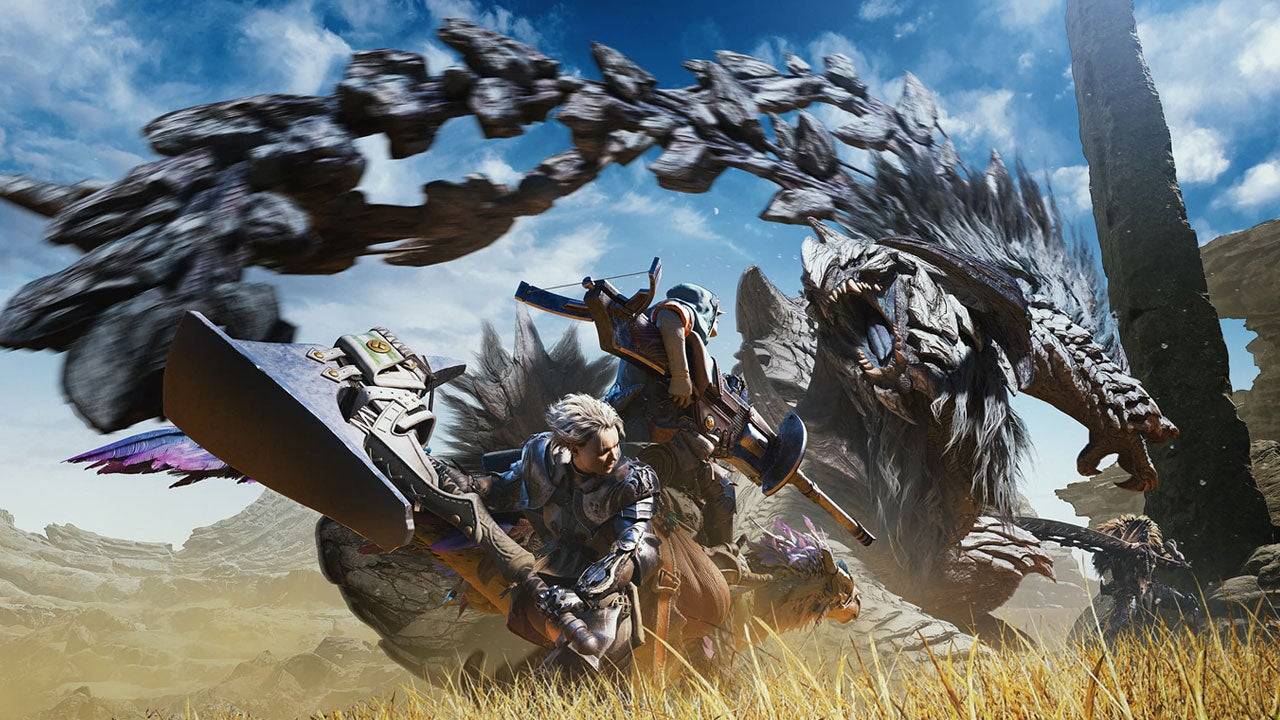
In the leadup to its global launch, Monster Hunter Wilds shattered pre-order records on both Steam and PlayStation, effortlessly following in the footsteps of its extraordinarily popular predecessors, 2022's Monster Hunter Rise and 2018's Monster Hunter: World. These sales figures firmly establish Capcom's unique and esoteric RPG series as one of the biggest video game franchises worldwide.
However, this wasn't always the case. Less than a decade ago, the notion of a Monster Hunter game achieving such global acclaim would have seemed far-fetched. Rewind to the series' inception in 2004, and the idea would have been even more improbable; the original game received mixed reviews. It wasn't until a year later, with the release of Monster Hunter on the PSP, that the series truly took off—but only in Japan.
For a long time, Monster Hunter epitomized the "game series bigger in Japan than the rest of the world" phenomenon. The reasons for this were straightforward, as this story will elucidate, yet Capcom persistently sought ways to expand Monster Hunter's reach to the international market. The success of Monster Hunter: World, Rise, and now Wilds underscores the value of those efforts.
This is the journey of how Monster Hunter transformed from a domestic hit to a global powerhouse.
Around the time of Street Fighter 5's launch in 2016, Capcom underwent an internal reorganization to prepare for a new generation of games. These games would utilize the company's brand new RE Engine, replacing the aging MT Framework. This shift was more than just a technological upgrade; it came with a new mandate to create games for a global audience, not just for existing, territory-specific fans.
"It was a few factors that came together," says Hideaki Itsuno, a former game director at Capcom known for his work on Devil May Cry. "The change of the engine and also all teams were given a very clear goal at that point to make games that reach the global market. [Games] that are fun for everyone."
During the PS3 and Xbox 360 era, Capcom's games seemed to target an imagined "Western games market." While the action-heavy Resident Evil 4 was a success, more gun-focused spinoffs like Umbrella Corps and the sci-fi shooter series Lost Planet failed to capture the desired audience. Capcom realized it needed to create games that appealed to everyone, not just fans of traditional Western genres.
"I think that we had that clear goal of just focusing and not holding anything back," Itsuno says. "Towards making good games that would reach people from all over the world."
Itsuno notes that the period leading up to 2017 was crucial. "The changes in organization and the changes in the engine, all these elements came together around that time," he says. The launch of Resident Evil 7 that year marked the beginning of a Capcom renaissance.
No other series better embodies this new company goal for global success than Monster Hunter. While it had its dedicated fans in the West, the series was significantly more popular in Japan for decades. This wasn't by design, but rather due to real-world factors.
Monster Hunter found tremendous success when it transitioned from the PlayStation 2 to the PSP with Monster Hunter Freedom Unite. The handheld gaming market has always been stronger in Japan than in the West, as evidenced by the success of the PSP, Nintendo's DS, and more recently, the Switch. According to the series' executive producer Ryozo Tsujimoto, the key to Monster Hunter's success in Japan was the nation's advanced wireless internet network, which allowed gamers to play reliably with friends.
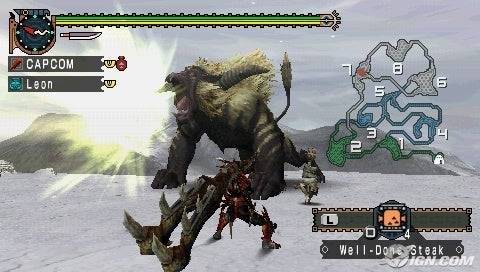
"20 years ago, Japan was in a very, very solid state in terms of the network environments available to people, and being able to connect and to play online together," Tsujimoto says. "And of course, we're not speaking for everyone there, because we realize that there are people who may not have had the chance to play with friends back then. But by moving over to handheld systems, we were able to grow that player base that was interacting and playing multiplayer together."
Monster Hunter, built on the core pillar of cooperative play, thrived on handheld consoles, which allowed friends to quickly join hunts together. Japan's advanced internet infrastructure meant that Monster Hunter was initially developed for a local market, even if unintentionally.
This created a feedback loop. Monster Hunter games became best-sellers primarily in Japan, leading Capcom to release Japan-only content and host Japan-only special events, further reinforcing the series as a "Japan-only" brand.
Despite this, Monster Hunter had fans in the West who were eager to experience the exclusive content enjoyed by Japanese players. As internet infrastructure improved globally and online play became standard for console gamers, Tsujimoto and his team saw an opportunity to launch their most advanced and globally accessible Monster Hunter game to date.
Released in 2018 on PlayStation 4, Xbox One, and PC, Monster Hunter: World marked a significant shift for the franchise. Instead of being designed for smaller, less-capable handheld consoles, it offered large-scale, AAA console quality action with enhanced graphics, larger areas, and, of course, bigger monsters.
"Our approach to the globalization of the series and Monster Hunter in general really ties into not only the themes that we had going into designing the game, but also in the name of the game," Tsujimoto reveals. "The fact that we called it Monster Hunter: World is really kind of a nod to the fact that we wanted to appeal to this worldwide audience that we wanted to really dig into and experience Monster Hunter for the first time."
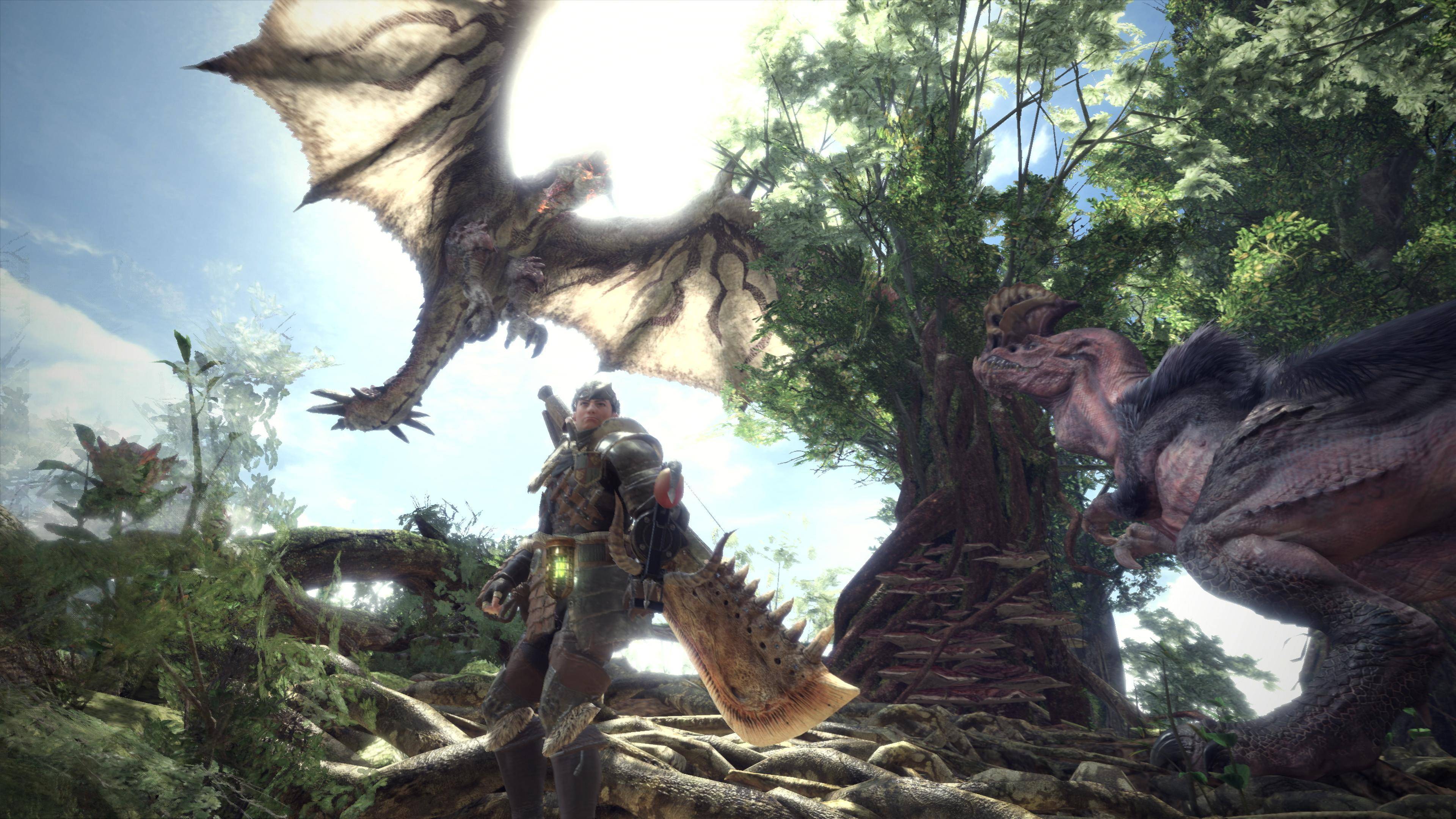
It was crucial that Monster Hunter: World did not favor one market over another. The game was released simultaneously worldwide, with no exclusive content locked to Japan, a move Tsujimoto says "comes with realigning ourselves to hit those global standards that people come to expect of titles around the world."
Tsujimoto and his team conducted extensive focus tests and user tests globally to refine Monster Hunter's formula for broader appeal. "We did focus tests and user tests across the world, and some of the impact of those — the feedback and the opinions that we got during that really affected how we designed our game systems and really affected how much success we had as a global title for that game," Tsujimoto says.
One significant change resulting from these tests was the inclusion of damage numbers when players hit monsters. These small tweaks to an already successful formula propelled Monster Hunter to unprecedented heights. Previous Monster Hunter games typically sold between 1.3 to 5 million copies, not including re-releases and special editions. In contrast, Monster Hunter: World and its 2022 follow-up, Monster Hunter Rise, both surpassed 20 million copies sold.
This growth wasn't accidental. Instead of altering Monster Hunter's core to suit Western tastes, Tsujimoto and his team found ways to make the series' unique and sometimes complex nature more accessible to a wider audience without compromising its essence. This approach continues with the latest game, Monster Hunter Wilds.
"At its heart, Monster Hunter really is an action game, and that sense of accomplishment you get from really mastering that action is an important aspect of Monster Hunter," Tsujimoto explains. "But for newer players, it's really getting to that point. The steps involved in getting to that sense of accomplishment is really what we're trying to strategize for, in terms of designing for new players. So with World and Rise, for example, we were taking really great care to analyze where players got stuck, what was hard to understand, what they were having trouble with, getting player feedback, and also doing our own kind of research into that. And all of that kind of knowledge has impacted how we've implemented new systems into Wilds."
Within 35 minutes of its release, Monster Hunter Wilds reached 738,000 concurrent players on Steam, more than double Monster Hunter: World's all-time high. With glowing reviews and the promise of more content to come, it's highly likely that Monster Hunter Wilds will continue the series' mission to conquer the world.